Most mental health platforms fail at the first hurdle—they feel clinical, transactional, and emotionally distant. For users already navigating vulnerability, these experiences create additional barriers rather than building trust.
I set out to answer: How might we create a digital mental wellness experience that feels genuinely supportive while delivering robust functionality?
Through qualitative research—including user interviews and community listening—I identified a critical insight: people seeking mental health support need to feel emotionally safe before they can engage functionally.
Existing platforms prioritized features over feelings. Users consistently described wanting warmth, understanding, and authenticity—not another sterile healthcare interface.
Information Architecture & User Flows
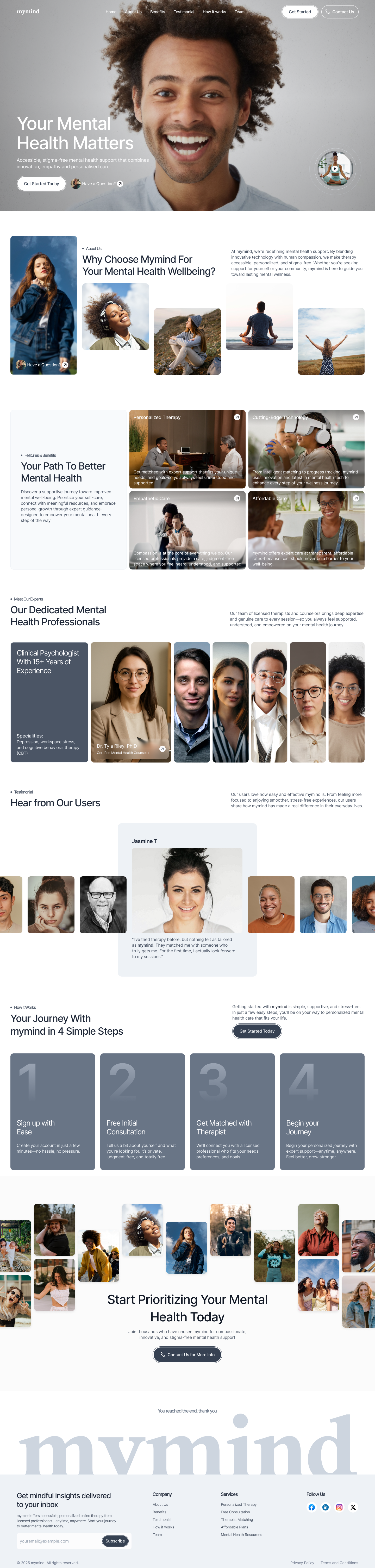
I mapped the complete user journey, identifying moments of hesitation and opportunities for reassurance. This informed a clear 4-step onboarding that reduces cognitive load during an already emotional experience.
Interface Design & Emotional Resonance
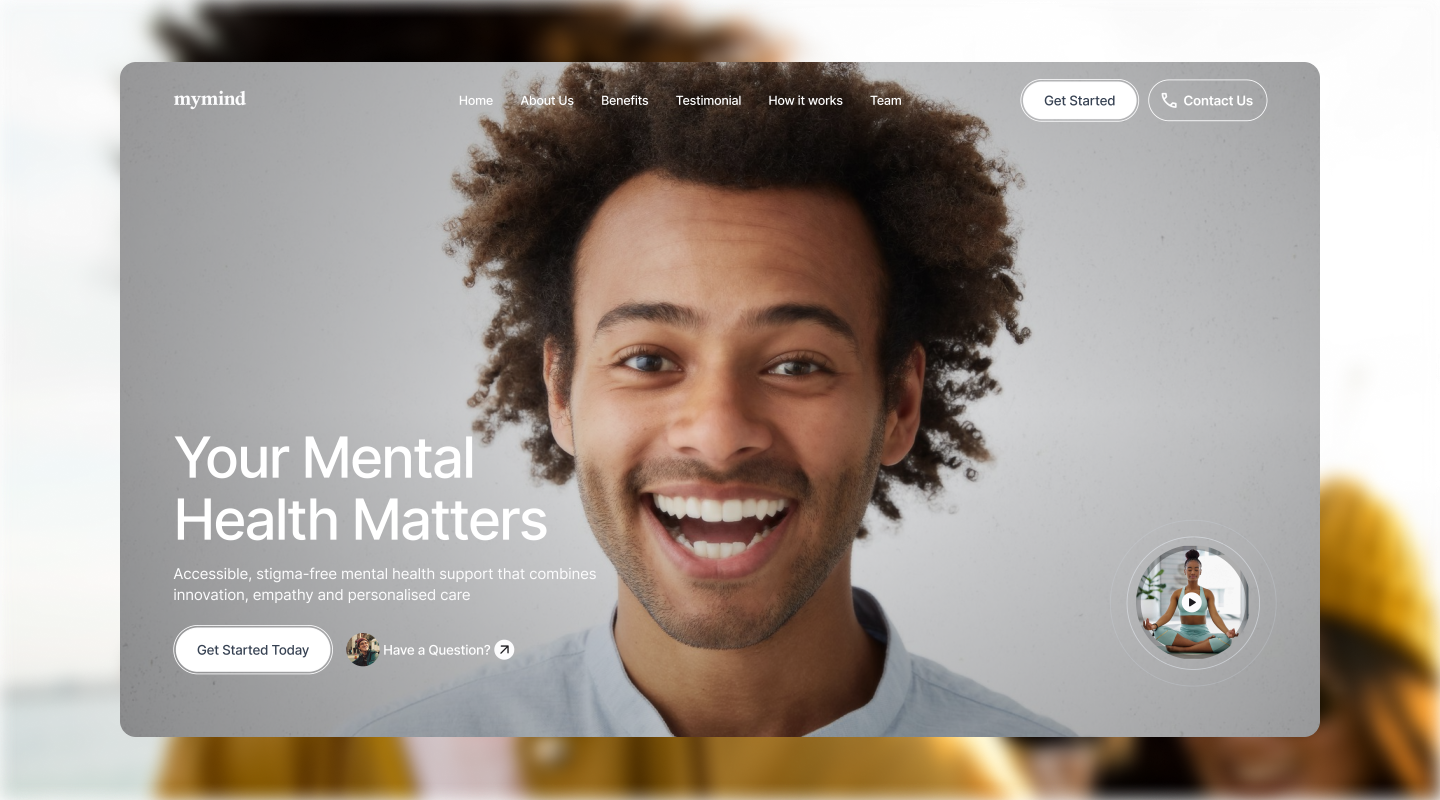
Working collaboratively with other designers, I developed and refined core pages: homepage, therapist profiles, feature sections, and "how it works" flows. Every decision—from microcopy tone to visual hierarchy—was tested against our north star: Does this build trust?
Purposeful Motion Design
I integrated subtle animations and transitions that guide attention without distraction. Each interaction serves the dual purpose of usability and emotional comfort.
Mymind demonstrates how thoughtful design can transform mental health support from transactional to relational. The platform balances modern UX patterns with genuine emotional intelligence.
Key Design Decisions:
- Inclusive therapist representation addressing diverse user needs
- SEO-optimized content architecture ensuring discoverability
- Accessible design patterns meeting WCAG standards
- Consistent visual language communicating safety and belonging
Core Principle: Every touchpoint reinforces the message: "You belong here. You're not alone."
This work showcases my approach to designing for sensitive contexts—where empathy and functionality aren't competing priorities, but interdependent ones.